Predictive Security in FinTech: How AI Combats Fraud in Real-Time Without Friction


Reviewed by
CFP® AuditFinancial Reviewer & Regulatory Compliance Auditor
Our content undergoes mathematical verification and regulatory scrutiny under TILA, FCRA, and state usury guidelines prior to release.
Editorial Policy & Integrity Pact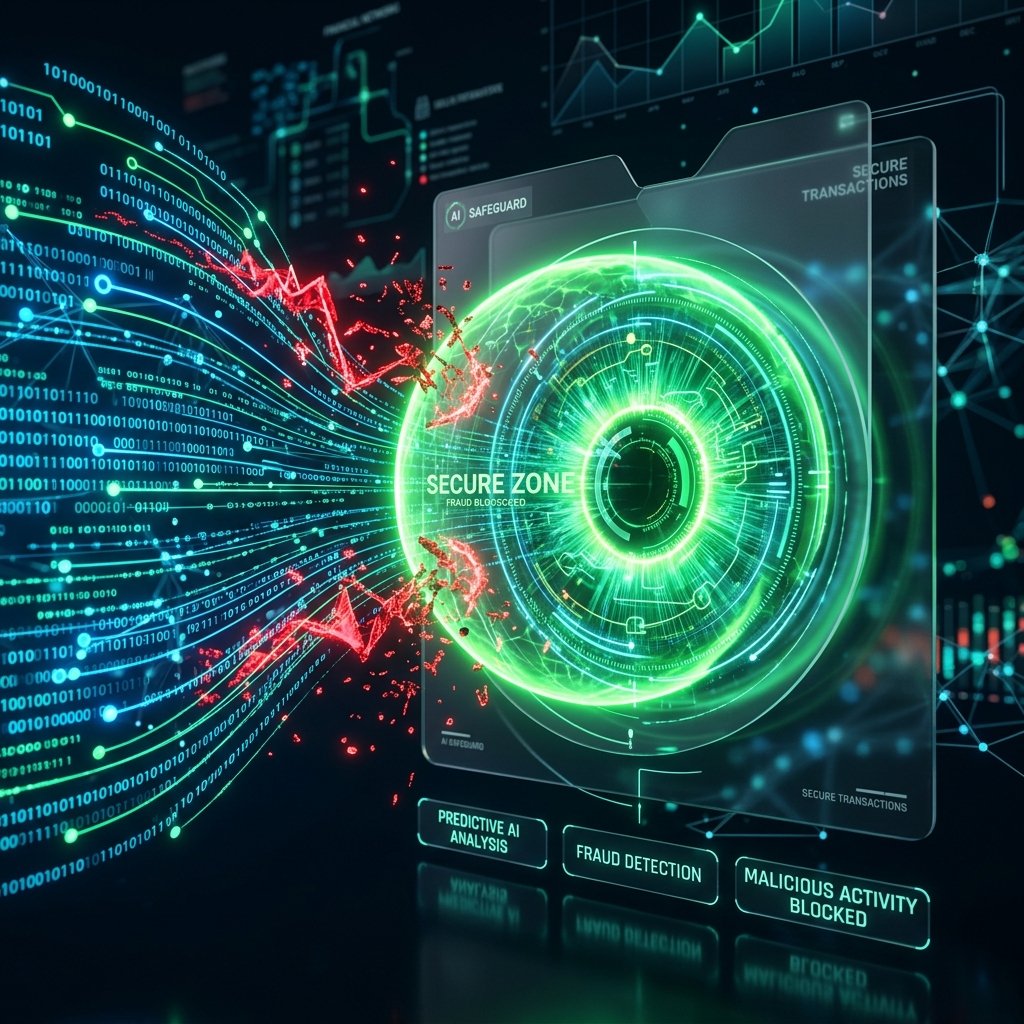
Direct Answer // TL;DR
TL;DR: The digital lending industry faces a critical paradox: how to implement military-grade security against sophisticated, AI-driven fraud rings without destroying the seamless, “instant” user experience that consumers demand. The solution is Predictive Security. Modern fintech platforms abandon high-friction legacy defenses (like endless captchas and SMS codes) in favor of invisible, background telemetry. By analyzing Behavioral Biometrics (keystroke dynamics, touchscreen pressure), employing adaptive ML risk scoring, and utilizing end-to-end Cryptographic Tokenization, platforms can instantly verify your identity and neutralize Account Takeover (ATO) attempts in milliseconds—long before the loan underwriting engine is ever exposed.
The Security Paradox of Instant Lending
The financial technology (fintech) sector is built upon the promise of velocity. In the context of emergency personal loans, consumers expect an application process that is frictionless, intuitive, and capable of delivering capital in seconds. However, this exact velocity is highly attractive to cybercriminals.
If a platform can disburse a $2,000 loan to a legitimate consumer in 60 seconds, it can also disburse $2,000 to a fraudster who has stolen that consumer’s identity in the same amount of time.
Historically, banks solved this security problem by introducing massive amounts of friction. They required users to physically visit branches, show government IDs, answer obscure security questions (“What was the name of your first pet?”), and enter complex SMS multi-factor authentication (MFA) codes.
In the digital era, this friction is unacceptable. Every additional step in an online application form causes exponential customer drop-off (cart abandonment). Furthermore, static defenses like SMS MFA are increasingly vulnerable to sophisticated attacks, such as SIM-swapping.
This creates the ultimate fintech paradox: How do you achieve maximum cryptographic security with zero visual friction? The answer engineered by platforms like instantloans.ai is a shift from active, user-facing security to passive, predictive Artificial Intelligence (AI).
The Invisible Shield: Behavioral Biometrics
The foundation of predictive security is a technology known as Behavioral Biometrics. Traditional biometrics (like Apple’s FaceID or a fingerprint scanner) require active participation from the user. Behavioral biometrics operate silently in the background, analyzing the unique, subconscious ways a human interacts with their digital device.
From the moment an applicant arrives on the loan application portal, the AI security engine begins compiling a dynamic biometric profile using passive telemetry:
- Keystroke Dynamics: The algorithm measures the exact millisecond flight times between keystrokes. It analyzes the rhythm and cadence with which a user types their own name and address. A legitimate user types their own name with a highly specific, ingrained rhythm; a fraudster reading from a stolen database types it differently.
- Cursor and Touch Trajectories: On a desktop, the AI monitors the acceleration curves and erratic movements of the mouse. On a mobile device, it measures touchscreen pressure and swipe velocity.
- Sensor Telemetry: The engine accesses raw data from the smartphone’s gyroscope and accelerometer to confirm that the device is being held by a physical human in three-dimensional space, instantly flagging emulated environments or automated bots.
If the behavioral telemetry indicates that an automated script is rapidly injecting data into the form, or if the keystroke dynamics strongly deviate from normal human behavior, the predictive engine instantly terminates the session. It neutralizes the attack before the fraudster can even submit the application.
Explore Loan Options
*Estimates are for informational purposes only under Truth in Lending Act (TILA). APR ranges from 5.99% to 35.99% based on credit profile. Funding decisions are executed by partner algorithms. No impact on FICO score during evaluation.
Adaptive Security and Identity Spoofing
Modern fraud is rarely perpetrated by lone hackers guessing passwords; it is executed by highly organized syndicates utilizing stolen, verified data purchased on the dark web. This is known as Identity Spoofing or Synthetic Identity Fraud.
To combat this, predictive security relies on adaptive ML risk scoring. The security engine does not treat every applicant equally. Instead, it calculates a real-time risk score based on dozens of background variables.
When an application is initiated, the AI cross-references the behavioral biometrics with:
- Device Fingerprinting: Is this device known? Has it been used in previous fraud attempts?
- IP Geolocation and ISP Routing: Does the IP address match the physical address on the application? Is the traffic routing through a known VPN or Tor exit node?
- Email/Phone Metadata: How long has this email address existed? Is it a disposable domain?
If the variables align (e.g., a known device, an established email, normal keystroke dynamics, matching geolocation), the AI determines the risk is low and permits a frictionless, “instant” application process.
However, if the AI detects an anomaly—for instance, an application for a user in Ohio is originating from an unrecognized device on an Eastern European IP address, using a freshly minted email account—the adaptive security engine automatically escalates the defense. It may trigger a “step-up” authentication, requiring the user to scan a physical ID or provide a live biometric selfie, dynamically increasing friction only when the mathematical probability of fraud demands it.
APR Interest Calculator
Simulate amortization schedules and evaluate the total cost of credit dynamically.
*This calculator is a simulation matching Truth in Lending Act (TILA) guidelines. Final rates depend entirely on matched participating lenders.
Cryptographic Tokenization: Securing the Data Pipeline
While behavioral biometrics verify who is applying, the platform must also secure the highly sensitive data (Social Security Numbers, bank routing details) being transmitted.
Predictive security architectures utilize end-to-end Cryptographic Tokenization to achieve this. Tokenization is the process of replacing sensitive data with a mathematically generated, randomized string of characters (a token) that possesses no intrinsic exploitable value.
When a user enters their checking account number to receive their loan disbursal, that data is encrypted locally within their browser before it ever travels across the internet. The matching platform’s edge servers receive this data and instantly tokenize it.
The actual banking credentials are vaulted securely in an isolated, SOC 2 compliant hardware facility. The matching engine and the underwriting AI only process the randomized token. If a cybercriminal manages to intercept the network traffic or breach the application server, they do not acquire the user’s bank details; they only acquire a useless string of high-entropy code that cannot be reverse-engineered without the cryptographic key held in the secure vault.
Conclusion: Trust in the Algorithmic Era
In the high-speed ecosystem of digital personal finance, security cannot be an afterthought, nor can it be a barrier to legitimate capital access. The integration of predictive AI security represents a fundamental evolution in consumer protection.
By abandoning archaic passwords and disruptive MFA codes in favor of invisible behavioral biometrics, adaptive risk scoring, and cryptographic tokenization, modern lending platforms can offer the best of both worlds. They provide subprime and emergency borrowers with the frictionless, instantaneous access to capital they desperately require, while simultaneously deploying a military-grade, predictive shield that neutralizes identity theft and fraud before it can occur. In the modern fintech landscape, true security is completely invisible.
*Disclaimer: Instantloans.ai is an automated financial matching technology platform. We do not act as direct lenders. APRs vary by lender and state regulations, and are determined by the independent lender based on your credit profile. Rates are not guaranteed.
Liquidity Protocol Ready
Need Capital Now?
Bypass the friction. Match with tier-1 lenders instantly through our encrypted algorithmic routing engine.