Integrating Your Digital Wallet for Instant Personal Loan Disbursal


Reviewed by
CFP® AuditFinancial Reviewer & Regulatory Compliance Auditor
Our content undergoes mathematical verification and regulatory scrutiny under TILA, FCRA, and state usury guidelines prior to release.
Editorial Policy & Integrity Pact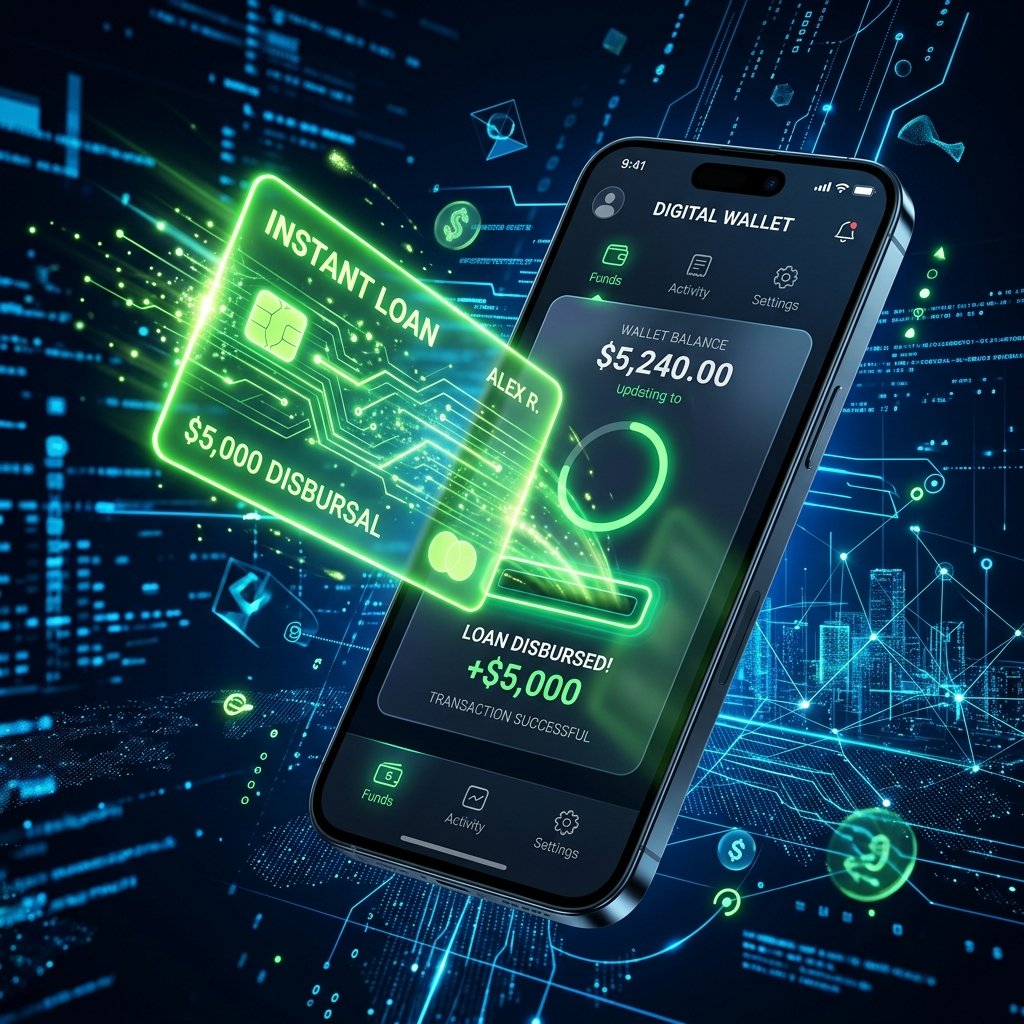
Direct Answer // TL;DR
TL;DR: The final bottleneck in emergency lending is the multi-day ACH clearing delay inherent in legacy bank accounts. By integrating a digital wallet (such as Cash App, Venmo, Apple Pay, or Google Wallet) with modern loan matching platforms, borrowers can bypass traditional banks entirely. Lenders push funds directly to the wallet’s associated debit card via Visa Direct or Mastercard Send networks, making emergency capital instantly available for immediate spend at Point-of-Sale or rapid cash withdrawal.
The “Last Mile” Problem in Digital Lending
In the logistics industry, the most expensive and complex phase of delivery is the “last mile”—moving a package from a local distribution hub to the customer’s front door. The digital lending industry faces a nearly identical challenge. Algorithms can parse gigabytes of Open Banking data to underwrite a loan in milliseconds. However, moving the approved capital from the lender’s corporate treasury to the borrower’s pocket historically relied on the Automated Clearing House (ACH) network.
The ACH network, designed in the 1970s, operates on a batch-processing schedule. It does not process transactions on weekends or federal holidays. If a consumer in desperate need of emergency capital secures a loan on a Friday evening, the ACH system will not begin routing the funds until Monday, and the receiving bank may hold the funds until Tuesday or Wednesday to verify settlement.
This multi-day latency completely neutralizes the benefit of instant algorithmic underwriting. When a borrower needs funds to prevent an auto repossession or a utility shutoff today, a three-day clearing delay is functionally equivalent to a denial. The solution to this “last mile” problem lies in circumventing the traditional ACH checking account entirely and routing funds directly into the modern consumer’s digital wallet.
The Architecture of Digital Wallet Disbursal
Digital wallets, such as Cash App, Venmo, PayPal, Apple Cash, and Google Pay, have evolved from simple peer-to-peer (P2P) payment apps into comprehensive, neo-banking ecosystems. Crucially, these platforms are deeply integrated with the instant push-payment networks operated by major card conglomerates, specifically Visa Direct and Mastercard Send.
When a borrower opts for a digital wallet disbursal, the architecture of the transaction shifts. Instead of the lender sending an ACH command to a traditional routing number, the lender requests the 16-digit debit card number associated with the borrower’s digital wallet.
Once the loan is approved and digitally signed, the lender’s API initiates a push-payment through the Visa or Mastercard network directly to that specific debit card. Because these networks were originally engineered to authorize point-of-sale retail transactions instantly, they are capable of settling funds in real-time, 24/7/365. The capital bypasses the slow ACH batch files and appears as “available balance” in the borrower’s Cash App or Venmo account within seconds.
Explore Loan Options
*Estimates are for informational purposes only under Truth in Lending Act (TILA). APR ranges from 5.99% to 35.99% based on credit profile. Funding decisions are executed by partner algorithms. No impact on FICO score during evaluation.
Strategic Advantages of Wallet Integration
For the modern borrower, particularly those operating in the subprime or gig-economy sectors, the integration of a digital wallet for loan disbursal offers profound strategic advantages beyond mere velocity.
1. Immediate Point-of-Sale Utility Funds deposited into a digital wallet are immediately actionable. If you secure a loan to purchase a replacement part for your vehicle, funds pushed to an Apple Cash or Google Pay account are instantly accessible via NFC tap-to-pay at the auto parts store. There is no need to wait for a physical debit card to arrive in the mail or for a traditional bank transfer to clear.
2. Bypassing Overdraft Traps Many consumers seeking emergency loans are already operating with negative balances in their primary traditional checking accounts due to cascading overdraft fees. If a lender deposits a $500 loan into an account that is overdrawn by $150, the bank will immediately confiscate that $150 to satisfy the debt, leaving the borrower short of the capital they requested. Disbursing funds to a secondary, clean digital wallet ensures the borrower retains control over 100% of the loan principal, allowing them to prioritize their emergency expenses before addressing the overdraft.
3. Circumventing Legacy Bank Holds Traditional banks frequently place multi-day holds on large, incoming transfers as a generalized fraud prevention measure. A digital wallet ecosystem, accustomed to high-velocity peer-to-peer transfers, is generally less restrictive. Furthermore, platforms like Cash App and Venmo provide their own internal routing and account numbers, allowing borrowers to receive direct deposits even if they do not possess a traditional bank account, fostering true financial inclusion for the unbanked population.
The Mechanics of Setup and Security
To leverage digital wallet disbursal effectively, the borrower must understand the technical requirements and security protocols involved.
First, the digital wallet must be fully verified. This typically requires passing the platform’s internal Know Your Customer (KYC) protocols by providing a Social Security Number and uploading a government-issued ID. Unverified wallets are subjected to strict incoming transaction limits that may block a larger loan disbursal.
Second, the borrower must possess the virtual debit card associated with the wallet. While you do not need the physical plastic card, you must be able to access the 16-digit PAN, expiration date, and CVV within the app interface. It is this specific credential that the lender utilizes to execute the Visa Direct or Mastercard Send push-payment.
Finally, security is paramount. A digital wallet loaded with loan funds is a prime target for credential stuffing and phishing attacks. Borrowers must enable Two-Factor Authentication (2FA) via an authenticator app (not SMS, which is vulnerable to SIM-swapping) on their wallet account. Furthermore, they should ensure that biometric locks (FaceID or fingerprint authentication) are required to open the application and authorize outbound transfers.
APR Interest Calculator
Simulate amortization schedules and evaluate the total cost of credit dynamically.
*This calculator is a simulation matching Truth in Lending Act (TILA) guidelines. Final rates depend entirely on matched participating lenders.
The Cost Equation: Analyzing Transfer Fees
The velocity of digital wallet disbursal is not always free. Borrowers must calculate the total cost of capital, which includes any fees associated with the transmission of funds.
When a lender utilizes Visa Direct or Mastercard Send to push funds to a debit card, they incur a network interchange fee. Many lenders absorb this cost as a competitive advantage. However, some subprime lenders pass this cost directly to the consumer, framing it as an “Expedited Funding Fee” or an “Instant Disbursal Premium.” This fee can range from a flat $5.00 up to 1.5% to 2% of the total loan amount.
Furthermore, once the funds reside in the digital wallet, the borrower must consider the cost of extracting physical cash if necessary. If a borrower needs to move funds from Cash App to a traditional checking account instantly, Cash App charges an instant transfer fee (typically 0.5% to 1.75%). Conversely, standard ACH transfers out of the wallet are free but introduce the very multi-day delay the borrower originally sought to avoid.
The strategic borrower must weigh these micro-fees against the urgency of their crisis. If a $15 instant disbursal fee prevents a $100 late penalty on rent or stops a vehicle repossession, the fee is a mathematically sound investment. If the emergency is not time-sensitive, opting for a free, standard ACH transfer is the more fiscally responsible choice.
Conclusion: Engineering a Frictionless Financial Stack
The era of relying exclusively on a single legacy checking account is over. Modern consumers must engineer a diversified personal financial stack that maximizes their access to liquidity and utility.
Integrating a robust digital wallet ecosystem into your borrowing profile solves the critical “last mile” problem of loan disbursal. By leveraging the instant push-payment capabilities of networks like Visa Direct, borrowers can bypass the archaic, batch-processing delays of the ACH system. Whether utilizing Apple Pay for immediate retail purchases or Cash App for rapid peer-to-peer debt resolution, digital wallet integration ensures that when algorithmic lenders approve emergency capital, that capital is deployed and actionable at the speed of the modern digital economy.
*Disclaimer: Instantloans.ai is an automated financial matching technology platform. We do not act as direct lenders. APRs vary by lender and state regulations, and are determined by the independent lender based on your credit profile. Rates are not guaranteed.
Liquidity Protocol Ready
Need Capital Now?
Bypass the friction. Match with tier-1 lenders instantly through our encrypted algorithmic routing engine.